Gear guide · Tracking

Best Recovery & Sleep Wearables of 2026

A recovery wearable answers one question each morning: did you actually recover, or should you back off today? The honest signals are heart-rate variability, resting heart rate, and sleep, and consumer rings and bands track all three well enough to read the trend. Ranked below by what they measure, the subscription math, and who each one fits.

Affiliate disclosure: we may earn a commission if you buy through links on this page, at no cost to you. Rankings are set by features and value, never by commission rate. Prices are approximate and change often; check Amazon for the current price. How we make money.

The short answer

The best recovery wearable for most people is the Oura Ring 4: comfortable 24/7 wear, strong sleep and HRV tracking, and a clear daily Readiness score. Athletes who want strain-versus-recovery coaching should choose WHOOP; anyone who refuses a monthly fee should choose a subscription-free RingConn. Track the trend over days, not any single morning score.

WHOOP Peak (12-Month Membership)
Best for training load

WHOOP Peak (12-Month Membership)

WHOOP

The screenless band built around one question: how recovered are you, and how much strain did you just take on? The strain-versus-recovery model is the clearest in the category for athletes who train hard and want to know when to push and when to deload.

  • Strain vs. recovery coaching model
  • Continuous HRV, RHR, and sleep tracking
  • No screen, ~4–5 day battery, on-body charging
  • Subscription includes the band
RingConn Gen 2 Smart Ring
Best subscription-free

RingConn Gen 2 Smart Ring

RingConn

Nearly everything Oura tracks, with no monthly fee and a 12-day battery. Adds sleep-apnea monitoring, and the lifetime-of-the-device data access is the draw for anyone allergic to subscriptions. The smart pick if recurring fees are a dealbreaker.

  • No subscription, ever
  • Sleep, HRV, stress + sleep-apnea monitoring
  • ~12-day battery life
  • Charging case included
RingConn Gen 2 Air
Best lightweight ring

RingConn Gen 2 Air

RingConn

A slimmer, lighter, cheaper RingConn for people who do not want to feel the ring. Still subscription-free, still tracks sleep, HRV, stress, and heart rate, with a 10-day battery. The most comfortable way into recovery tracking under $200.

  • Ultra-thin, ~2 g lighter build
  • No subscription
  • Sleep, HRV, stress, heart rate
  • ~10-day battery life
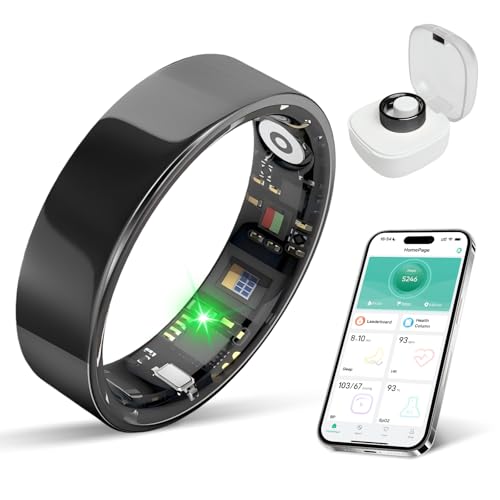
BIEMHA Smart Ring Health Tracker
Budget entry

BIEMHA Smart Ring Health Tracker

BIEMHA

A no-subscription budget ring to test whether you will actually look at the data before spending $350. Trends, not lab-grade numbers, for sleep, heart rate, and steps. If you check it every morning for a month, upgrade to an Oura or RingConn.

  • Sleep, heart rate, and step trends
  • No subscription, app included
  • Multi-day battery
  • The proof-of-habit price point

How we chose

We have not tested these wearables in person. These picks come from comparing the metrics each device tracks (sleep staging, HRV, resting heart rate), sensor and battery specs, subscription requirements and total cost of ownership, and verified-owner reviews. We are explicit about which devices need a membership, and we never claim hands-on validation studies we did not run.

Our Oura Ring 4 review covers the subscription, the sizing kit and how much to trust consumer sleep staging.

What the data actually tells you

Heart-rate variability, resting heart rate, and sleep are real, physiologically meaningful recovery signals. Consumer wearables track them well enough to surface trends. a multi-day dip in HRV or a creeping resting heart rate is a genuine "back off" flag. What they are not: lab-grade absolute instruments. A single morning "readiness" or "recovery" number is a nudge, not a verdict, and it is noisy day to day. Watch the seven-day direction, not today's score.

How to choose

  • Form factor: rings are more comfortable for sleep and all-day wear with multi-day battery, but have no screen; bands are built around athletic strain-and-recovery coaching.
  • Subscription: Oura and WHOOP charge an ongoing fee (WHOOP bundles the hardware in); RingConn rings are pay-once. Add the recurring cost to the sticker price.
  • What you will actually use: the best wearable is the one you check every morning. Buy for the metric you will act on.

Turn the data into action

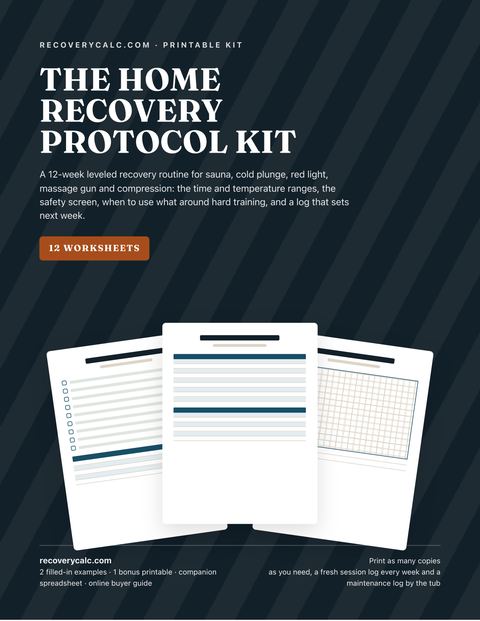
A wearable tells you when to recover; our calculators tell you how much. On a low-readiness morning, skip the cold and lean on gentle heat and sleep; on a green day, that is when to stack a hard session with deliberate recovery. Build the plan with the recovery protocol builder.

Not medical advice. This is researched general information, not professional or medical guidance. Consumer wearables are not medical devices and should not be used to diagnose or manage any health condition. See a clinician for symptoms or health concerns. Use at your own risk.

Related guides

Free guide · Endure Weekly

Get the free Ultimate Zone 2 Training Guide.

Heart-rate zones, sample run / bike / Hyrox workouts, and the aerobic-base method elites use to recover faster and race longer — yours free with your first email. Then one Endure Weekly email every Wednesday on training and recovery, from the team behind RecoveryCalc and RunBikeCalc.

No spam, unsubscribe anytime. ~1 email per week.