Home Sauna Setup Guide
A home sauna is one big decision (which of three install paths fits your space and panel) followed by a handful of small ones. Here is the whole setup, from the outlet question to the first firing.
There are three ways to set up a sauna at home. A sauna blanket needs zero install and a normal outlet. An infrared cabin assembles in a spare room in an afternoon and also runs on 110V. A traditional barrel sauna delivers the 170 to 195F heat the longevity research used, but needs a level pad outdoors and usually a dedicated 220V circuit. Pick the path your space and electrical panel already support.
Affiliate disclosure: we may earn a commission if you buy through links on this page, at no cost to you, never at the cost of an honest rec. How we make money.
Step 1: pick your install path
Every home sauna decision collapses into one question: what does your space and electrical panel already support? The three paths below cover the whole market. The blanket is the no-install habit-builder. The infrared cabin is the plug-in room upgrade. The barrel is the true Finnish instrument, and the only path that involves site prep and an electrician. The full head-to-head on heat quality is in infrared vs. traditional sauna, and the ranked picks per tier are in best home saunas.
Choose your heat source (one of three, not all three)
Three alternative paths, not a bundle. Current prices are in each description; they move often on Amazon.
-
 Path 1: No install HigherDOSE Infrared Sauna Blanket
The zero-install path, under $750. Far-infrared up to 158F that rolls out on a bed and stores in a closet. No electrician, no floor prep, no square footage. The right call for apartments and for proving the heat habit before a cabin.
-
 Path 2: Indoor cabin Dynamic Saunas Maxxus 2-Person Full-Spectrum Infrared Sauna
The spare-room path, under $5,000 at current Amazon pricing. A full-spectrum cedar cabin with near-zero EMF that assembles indoors in an afternoon and runs on a standard 110V outlet. No dedicated circuit, no site prep.
-
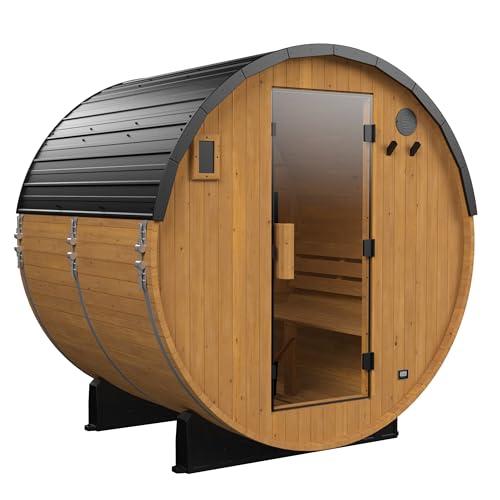 Path 3: Outdoor barrel Backyard Discovery Paxton 2-4 Person Barrel Sauna
The backyard path, under $5,000 plus electrical. A cedar barrel with a 9kW heater and stones for true Finnish-style heat, the range used in the Laukkanen research. Needs a level pad and a dedicated 240V circuit, so budget electrician time.
Budget ranges are a guide; prices update on Amazon and change often. As an Amazon Associate we earn from qualifying purchases at no extra cost to you. Researched information, not medical advice.
Step 2: placement and floor
Blanket: any bed or floor, with a towel layer for sweat. Done. Indoor cabin: a spare room, basement, or garage corner with a few inches of wall clearance for ventilation and any hard, level flooring; carpet works under most infrared cabins but hard floor is easier to live with when you sweat. Measure your door swing and ceiling height before ordering, and remember the panels arrive as large flat boxes. Outdoor barrel: a level base is the whole game. Compacted gravel ($200 to $500 DIY) drains well; concrete ($800 to $2,000) is the buy-once option. Leave access to the heater side and think about the walk from your back door in winter, because a sauna you have to shovel a path to gets skipped in exactly the season you want it most.
Step 3: the electrical question, honestly
This is where budgets go sideways, so get it right before checkout. Blankets and most 1 to 2 person infrared cabins draw what a space heater draws and run happily on a standard 110V outlet on its own breaker. Traditional electric heaters in the 6 to 9 kW range need a dedicated 220V circuit: budget $500 to $1,500 for the electrician and confirm your panel has the spare capacity first. Running costs are smaller than people fear, roughly $5 to $10 a month for a daily infrared habit and $20 to $40 for a well-used traditional sauna. Run your exact number at your local kWh rate, and see the full purchase math in how much does a home sauna cost.
Step 4: first firing and the accessories that matter
New cabins and barrels should be run empty once or twice to cure finishes and burn off manufacturing residue before you sit inside; your manual will specify the routine. After that, only two accessories earn their place on day one. A bench-level thermometer is non-negotiable, because heater dials report the sensor's location, not where you sit, and temperature is your dose. A bucket and ladle belongs only in a traditional sauna with stones. Towels, a headrest, and a backrest can wait until you know how you actually use the room.
The day-one accessory kit
Under $150 for the two items worth buying with the sauna itself.
-
 Measure the dose GLOBOTECH Sauna Thermometer & Hygrometer Combo
An analog temperature and humidity gauge rated to 250F, no batteries. Temperature is your dose: the calculators on this site only help if you know your real bench-level number, not the heater setting.
Under $25
Shop on Amazon → -
 Traditional only Northwood Sauna Cedar Sauna Bucket and Ladle Set
For traditional heaters only: water over the stones (loyly) spikes perceived heat and humidity. Canadian red cedar with a removable liner. Skip this for infrared cabins and blankets, which have no stones.
Under $100
Shop on Amazon →
Budget ranges are a guide; prices update on Amazon and change often. As an Amazon Associate we earn from qualifying purchases at no extra cost to you. Researched information, not medical advice.
Step 5: wire it into a protocol
The research case for sauna is built on frequency: the Finnish cohort data rewards 4 to 7 sessions a week, which is exactly why owning the sauna beats commuting to one. Score your week against those numbers in the sauna heat-dose calculator, use the sauna temperature guide to pick a setting for your sauna type, and start with the ramp in sauna for beginners. If you are pairing heat with cold, the ordering question is answered in sauna or cold plunge first, and the full room build that a sauna anchors is costed out in best recovery setups. This is researched information, not medical advice; if you have a cardiovascular condition or are pregnant, talk to your doctor before starting a heat practice.
Frequently asked questions
Do I need an electrician to install a home sauna?
It depends entirely on the path. Sauna blankets and most infrared cabins run on a standard 110V household outlet, so no electrician is needed. Traditional saunas with 6 to 9 kW electric heaters need a dedicated 220V circuit, which typically costs $500 to $1,500 of electrician time. Check your panel capacity before you order the sauna, not after.
Can I put a sauna indoors?
Infrared cabins are designed for it: they assemble in a spare room or garage, sit on any hard flooring, and produce far less ambient heat and moisture than a traditional sauna. Traditional saunas can go indoors too, but they want a floor drain, a vapor barrier, and ventilation planning, which is why most home traditional builds end up outdoors on a pad.
What do I put under an outdoor barrel sauna?
A level, stable pad. Compacted gravel runs $200 to $500 as a DIY job and drains well; a concrete pad runs $800 to $2,000 poured. The barrel shape sheds rain, but the base staying level is what keeps the staves tight and the door square over years of freeze and thaw.
How long does a home sauna take to heat up?
Infrared cabins are usable in 10 to 15 minutes because they heat you directly rather than the air. Traditional electric heaters take 30 to 60 minutes to bring a small room to the 170 to 195F range. Sauna blankets preheat in about 10 minutes. Factor the wait into whether a given path fits your schedule, because the sauna you actually use beats the hotter one you skip.