Foam Rolling vs. Massage Gun
Both buy you a few minutes of extra range of motion. One costs $20, the other $200 — here's when the gun actually earns it.

Neither is strictly better: both a foam roller and a massage gun deliver the same reliable effect, a short-term range-of-motion gain with no strength loss (Konrad 2020). Pick on convenience and budget. A $20 foam roller covers large muscle groups; a $200 massage gun is portable and targets pinpoint spots. Many people keep both for different jobs.
The verdict: these tools do nearly the same job, so buy on convenience and budget, not on a mythical winner. The one effect both reliably deliver is a short-term range-of-motion gain with no strength loss — Konrad 2020 showed exactly that for percussion massage, and foam rolling produces a comparable transient bump. A foam roller is cheaper and better for large muscle groups; a massage gun is portable and better for pinpoint spots. Neither breaks up knots or heals tissue. Here is the honest comparison.
Affiliate disclosure: we may earn a commission if you buy through links on this page, at no cost to you — never at the cost of an honest rec. How we make money.
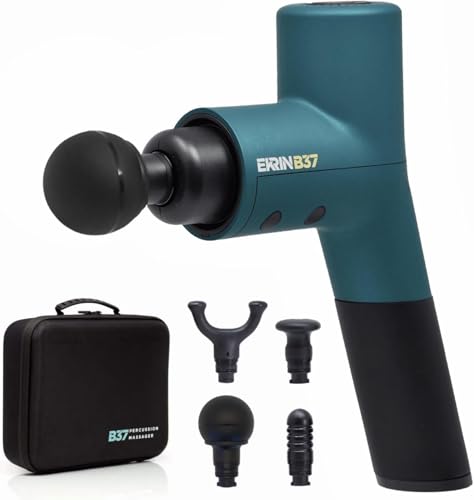
The massage gun we point most readers to
The Ekrin B37v2 pairs a brushless motor with an angled handle that makes it easier to reach your own back and hamstrings. It delivers most of what the premium guns do for targeted work on the spots a foam roller cannot isolate.
See the Ekrin B37v2 on Amazon →As an Amazon Associate we earn from qualifying purchases.
For the gun side of this, our Ekrin B37v2 review and Hypervolt 3 Pro review cover the value and premium options, with the same honest account of what percussion does.
What the evidence actually supports
The strongest, cleanest finding in this space is acute range of motion. Konrad 2020 (see sources) found that percussion massage produced an immediate improvement in range of motion without a loss of strength — which is the ideal combination for a pre-training warm-up tool. The foam-rolling literature shows a similar pattern: a short-lived flexibility increase that fades within an hour or so.
Note what is missing. Neither tool has solid evidence for "breaking up knots" in any structural sense, dissolving scar tissue, or accelerating the underlying healing of muscle. They buy you a transient mobility window and a feel-good sensation. That is genuinely useful — it just is not the deep-tissue miracle the marketing implies. Association with feeling better is not proof of repair.
The foam roller case
A foam roller is the value play. For $20–$50 you get a tool that covers large muscle groups efficiently — quads, hamstrings, glutes, back, and the IT-band region — using your own body weight to set the pressure. It is durable, needs no charging, and travels fine in a car. For most people chasing a pre-workout flexibility bump or a general loosening routine, the roller does the job the research supports at a fraction of the cost of anything motorized.
The massage gun case
A massage gun (percussion device) earns its $100–$400 price on two things: precision and portability. It can pressure small, awkward spots a roller cannot reach well — calves, forearms, around the shoulder — and you can use it standing, seated, or in a gym bag. Konrad 2020's range-of-motion result was measured on percussion specifically, so the evidence for the acute effect is direct. The trade-off is cost, batteries to keep charged, and motor noise. If you want targeted, on-the-go mobility work, it is the better tool; if you want the cheapest thing that works, it is not.
Head to head
| Factor | Foam roller | Massage gun |
|---|---|---|
| Typical cost | $20–$50 | $100–$400 |
| Best for | Large muscle groups | Pinpoint spots |
| Range-of-motion gain | Transient bump (rolling data) | Acute gain, no strength loss (Konrad 2020) |
| Portability | Bulky but throw-in-the-car | Gym-bag friendly |
| Upkeep | None | Charging, noise |
| What neither does | Break up knots, heal tissue, erase deep soreness | |
Which should you choose
Decision tree: If you want the cheapest tool that works, buy a foam roller — the evidence-supported effect is a flexibility bump, and the roller delivers it for $30. If you need to reach small, specific spots or want something portable, the massage gun is worth the upgrade, and Konrad 2020's range-of-motion result was measured on percussion directly. If you have the budget and train often, owning both is reasonable — roller for big muscles, gun for targets.
If you are buying the gun, start with the best massage guns for picks across price tiers, and read Theragun vs. Hypervolt if you are choosing between the two big names. And remember what the data is clearest on: for post-workout soreness and recovery feel, cold immersion has more behind it than percussion — see cold plunge for muscle recovery and price a setup in the cold plunge calculator.
None of this is medical advice. If you have an acute injury, a clotting disorder, or numbness in the area, skip percussion over it and see a clinician. Runners and cyclists building a full recovery stack can see runbikecalc.
Frequently asked questions
Is a massage gun better than a foam roller?
Neither is strictly better — they overlap on the one effect both reliably deliver: a short-term gain in range of motion without losing strength. Konrad 2020 found percussion produced acute improvements in range of motion with no strength loss, and the foam-rolling literature shows a similar transient flexibility bump. A massage gun is more portable and targets small spots; a foam roller covers large muscle groups and costs far less. Pick on convenience and budget, not on a winner.
Does a massage gun actually do anything?
Yes, but modestly and briefly. Konrad 2020 showed percussion massage produced an acute increase in range of motion while preserving strength, which is useful right before training or for loosening a tight spot. What it does not do is reliably erase deep soreness, break up "knots" in any structural sense, or speed up tissue healing. Treat it as a short-term mobility tool, not a cure.
When should I use a foam roller instead of a massage gun?
Reach for the foam roller for large muscle groups — quads, hamstrings, back, IT band area — and when you want the cheapest tool that works. Use the massage gun for pinpoint spots a roller cannot pressure well, like calves, forearms, or around the shoulder, and when you want something you can throw in a gym bag. Many people keep both because they cover different jobs.
Will a massage gun help muscle recovery after a workout?
It can help how recovery feels — a brief mobility and comfort boost — but the evidence for it meaningfully accelerating actual recovery is thin. The clearest, best-supported effect is the acute range-of-motion gain from Konrad 2020. For soreness and recovery feel after hard sessions, cold immersion has more data behind it; see our cold-for-recovery guide.